PHP Uncovered: The Story, Power & Real-World Magic of PHP

🌱 Introduction
The History, Features and Uses of PHP is one of the most important topics for students learning web development. PHP is not just another programming language. It is the backbone of many popular websites you use every day. As a teacher, I always tell students one thing clearly. If you understand PHP properly at the beginning, backend development becomes much easier later.
In this chapter, you will learn where PHP came from, why it was created, what makes it special, and how it is used in real websites and applications. This topic builds your foundation for server-side programming, database connectivity, and dynamic web pages. So read it like a story, not like a boring theory.
📘 History, Features and Uses of PHP
📜 History of PHP
What is the history of PHP?
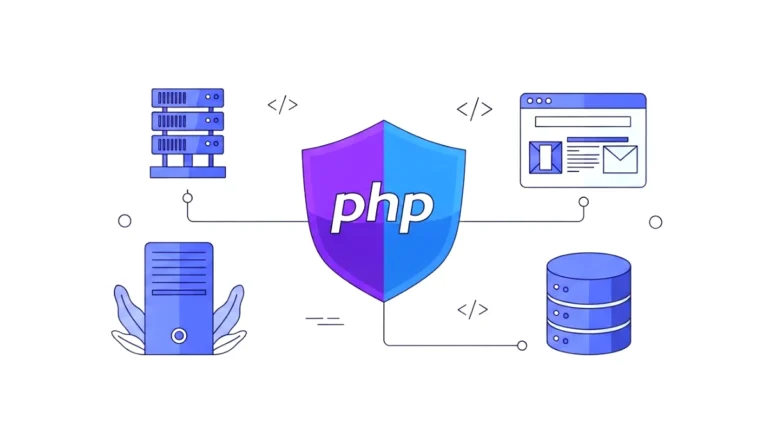
PHP stands for Hypertext Preprocessor. It is a server-side scripting language designed mainly for web development.
PHP was created in 1994 by Rasmus Lerdorf. At first, PHP was not a full programming language. It was a simple set of tools written in C to track visitors on his personal website. He named it Personal Home Page Tools.
Later, developers saw its potential. PHP slowly evolved into a powerful scripting language capable of handling databases, forms, sessions, and complete websites.
Why PHP was created
PHP was created to solve a real problem. Websites were static and boring. Developers wanted pages that could change content automatically based on user input. PHP made this possible without complex setups.
Evolution of PHP (Short Timeline)
- 1994 – PHP/FI released
- 1997 – PHP 3 introduced scripting support
- 2000 – PHP 4 with Zend Engine
- 2004 – PHP 5 with OOP support
- 2015 – PHP 7 with huge performance improvement
- PHP 8 – Faster execution and modern features
Exam Points to Remember
- PHP was created by Rasmus Lerdorf
- PHP is a server-side scripting language
- Originally called Personal Home Page
⭐ Features of PHP
Why PHP became so popular
PHP became popular because it is simple, flexible, and powerful. Students can learn it easily, and companies can build large systems with it.
🔹 Simple and Easy to Learn
PHP syntax is easy to understand, especially for beginners. Even students with basic HTML knowledge can start PHP quickly.
Why it exists:
To reduce the learning barrier for web developers.
Where it is used:
College projects, beginner websites, startup applications.
Exam Tip:
PHP syntax is similar to C and Java.
🔹 Open Source and Free
PHP is completely free. You do not need to pay for licenses or tools.
Why it exists:
To make web development accessible to everyone.
Where it is used:
Small businesses, freelancers, open-source projects.
Exam Tip:
PHP is open-source software.
🔹 Platform Independent
PHP works on Windows, Linux, and macOS.
Why it exists:
To allow developers to work on any operating system.
Where it is used:
Shared hosting servers, cloud servers, local machines.
🔹 Supports Databases
PHP works very well with databases like MySQL.
Why it exists:
Modern websites need to store and retrieve data.
Where it is used:
Login systems, registration forms, dashboards.
🔹 Fast Performance
PHP executes quickly on the server.
Why it exists:
Users expect fast-loading websites.
Where it is used:
High-traffic websites and APIs.
🔹 Strong Community Support
Millions of developers use PHP.
Why it exists:
Open-source growth and global usage.
Where it is used:
Online forums, documentation, tutorials.
🛠 Syntax of PHP (Basic)
Basic PHP Structure
<?php
// This is a PHP script
echo "Hello World";
?>
Explanation:
<?phpstarts PHP codeechoprints output?>ends PHP code
PHP Variables Example
<?php
$name = "Student";   // Variable declaration
echo $name;          // Display variable
?>
Teaching Tip:
Always remember, PHP variables start with $.
🌍 Uses of PHP
Where PHP is actually used
This is the most important part of the History, Features and Uses of PHP.
🔹 Dynamic Websites
PHP creates pages that change automatically.
Example:
User dashboards, profile pages.
🔹 Form Handling
PHP collects form data.
Example:
Login forms, feedback forms.
🔹 Database Operations
PHP inserts, updates, deletes, and fetches data.
Example:
Student records, online exams.
🔹 Content Management Systems
Popular platforms like WordPress use PHP.
Example:
Blogs, news websites.
🔹 E-commerce Websites
PHP powers shopping websites.
Example:
Product listing, cart system, payment pages.
Real-Life Practical Use
When a user logs into a website, PHP checks the username and password from the database and decides whether to allow access. This happens behind the scenes every second on the internet.
🎯 Conclusion
The History, Features and Uses of PHP explains why PHP is still one of the most important web technologies today. Once you understand PHP, learning advanced topics like database connectivity, sessions, cookies, and frameworks becomes much easier.
For students, PHP opens doors to backend development, freelancing, and real-world projects. For careers, PHP gives you a strong base for full-stack development. Learn it step by step, practice small programs, and everything will start making sense.